Here are some things I’ve done or thought about in regards to tabletop games (primarily TTRPGs, but wargaming as well).
I just worked on a tiny wargame during a 24-hour (in theory) game jam. I am in the midst of getting a zine of it put on itch.io so you can buy it with real money.
Published August 18, 2025.
(I’d throw this on the blog but this is more word-vomit than a focused “take”)
This past weekend I finished my campaign of Slugblaster. It was an incredibly fun experience and I learned a lot. More importantly, it is the only RPG campaign I can look back on and remember as “enjoyable” through and through, not just something that had some memorable moments (though of course there were stumbling points). Without further ado, here’s some assorted takeaways
Scheduling and campaign structure: We ran an 8 session campaign, and I made it clear from the start that the game would end after that, no more and no less. Slugblaster as a system has mechanics for the campaign epilogue and two of the game’s main “currencies” of Doom and Legacy are only used in that epilogue, so having a clear end point was encouraged by the rules. Keeping the end in mind was great and I’ll be trying to run short and finite campaigns in the future, because it keeps everyone mindful about giving their character an arc, making the most of their time, and short campaigns means I can run more systems :)
Having only 8 sessions means that it was crucial to have everyone show up to each session (we had a tiny exception to that but it was fine), and scheduling (the killer of many a group) was often a challenge. In general, I just told the group when the next session was and if someone had a conflict they needed to suggest a new time. We had to fight against inconsistent schedules and an abundance of technical difficulties, but once again I feel like everyone knowing how many sessions remained kept morale high (plus I would annoy the group chat until we found a time that worked).
Downtime beats/office hours: I love Slugblaster’s system for downtime beats: in short, each player has a unique series of open-ended scenes that they progress through between sessions which provide mechanical benefits (and drawbacks); the game forces you to have a character arc with a framework that helps shy players roleplay and isn’t too prescriptive to restrict veteran improv-ers. Unfortunately, our group usually did not have time on game days to do this second half of the session (purchasing beats and having downtime scenes). So between sessions I hosted a floating “Office Hours” where players could discuss what beats they were going to buy, talk with others about including other party members in their scenes, which additionally morphed into a forum where the group could discuss where they wanted to take their characters and the campaign itself. This was unexpectedly one of the highlights of the campaign for me; not only was everyone able to communicate their expectations and work together to figure out how to tell the best story, it was outside of the “main session” and there were no distractions of dice to roll or monsters to fight; we took time to talk about the game in a separate environment from actually playing the game.
In retrospect, we would have preferred to not be so pressed for time that we essentially split each session over two nights, but the core idea of an Office Hours is something I plan to bring to future games. We rethought plot elements, rebuilt characters and had discussions we never would have had if each session was all playing and no reflection.
Following the fun: I made several mistakes during the Slugblaster campaign, probably several each session. Something I got better at was being more receptive to the ideas of others, as well as recognizing my own errors and not being too proud to admit it. During the first few sessions, we were all learning a new set of rules, and certain elements fell flat because rules were misread or not read at all. Where I felt like I was really improving as a GM though was when mid-session an idea I had wasn’t panning out - it was more tedious or clunky in practice than it was in theory, and I had to get better at saying “hey folks, this task is no longer interesting so it’s going away, here’s something more fun for y’all to worry about”. I think this mentality was aided by the setting of Slugblaster; the whimsy and weirdness of interdimensional skateboarding made it so there wasn’t much suspension of disbelief required to pivot to something new instead of sticking to the old plan no one was enjoying.
I also got better at listening to players and not enforcing my vision of “canon”; during some Office Hours I realized that I was unfairly shutting down one of my players’ ideas because they were of a more slapstick genre than the world I was envisioning. As soon as I realized I was being pedantic and the tiny difference in tone was exclusively an issue for me, everyone had a lot more fun. There’s a tidbit in the Mothership rules that generally says “everyone is imagining a slightly different fictional space, don’t be a jerk because a player assumed cell phones exist and you assumed they didn’t”.
Other principles I thought were cool: Not necessarily from Slugblaster but either I started putting it in practice this campaign, or this system provided the sandbox to see the idea shine. Asking players what they want and having them sketch out the objectives of a session. Asking players what they want the consequence from failing a roll to be. Rolling dice in a bowl on camera (we played virtually) so everyone could get disappointed or hyped simultaneously. Creating NPCs that hate one member of the party and love another. Introducing an NPC as “someone a player knows” and having them create a person. Stars and Wishes (https://www.gauntlet-rpg.com/blog/stars-and-wishes). Fast forwarding to the interesting parts and rewinding if someone has a cool idea for something that just happened.
Asking questions. Listening to the answers. Letting the story be told by the people at the table, not just the one who bought the rulebook.
Anyways go buy Slugblaster: https://wilkies.itch.io/slugblaster
Published August 5, 2025.
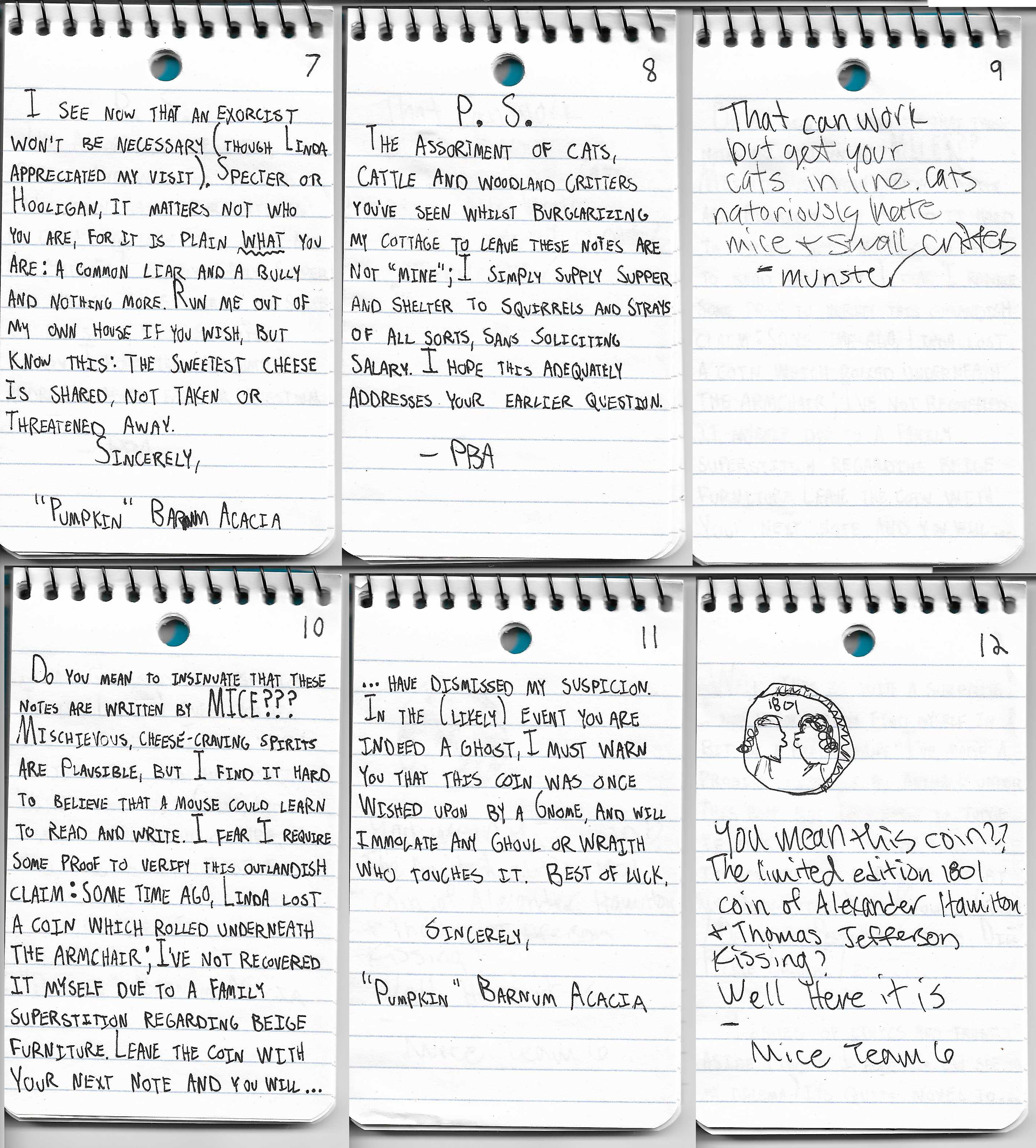
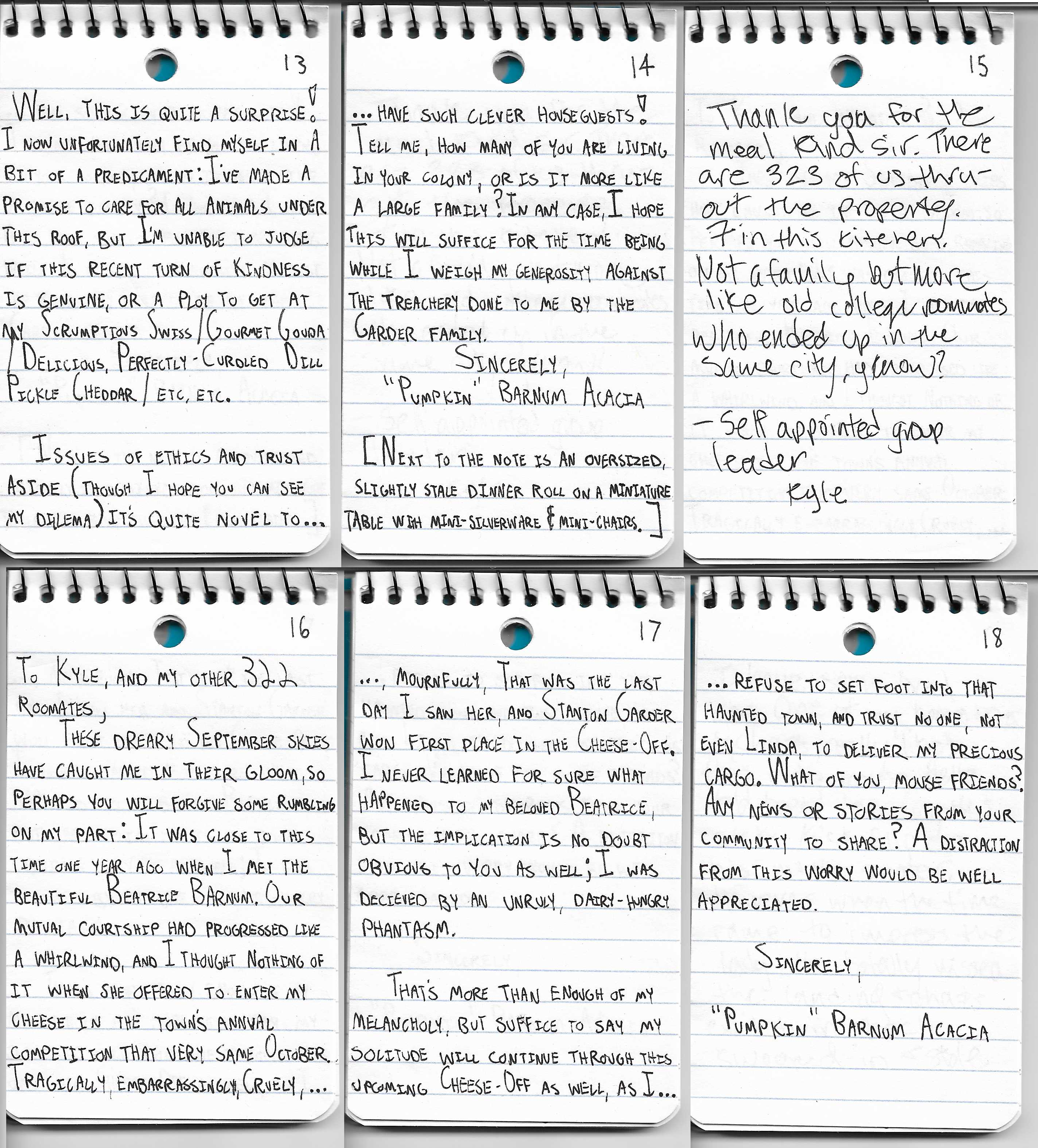
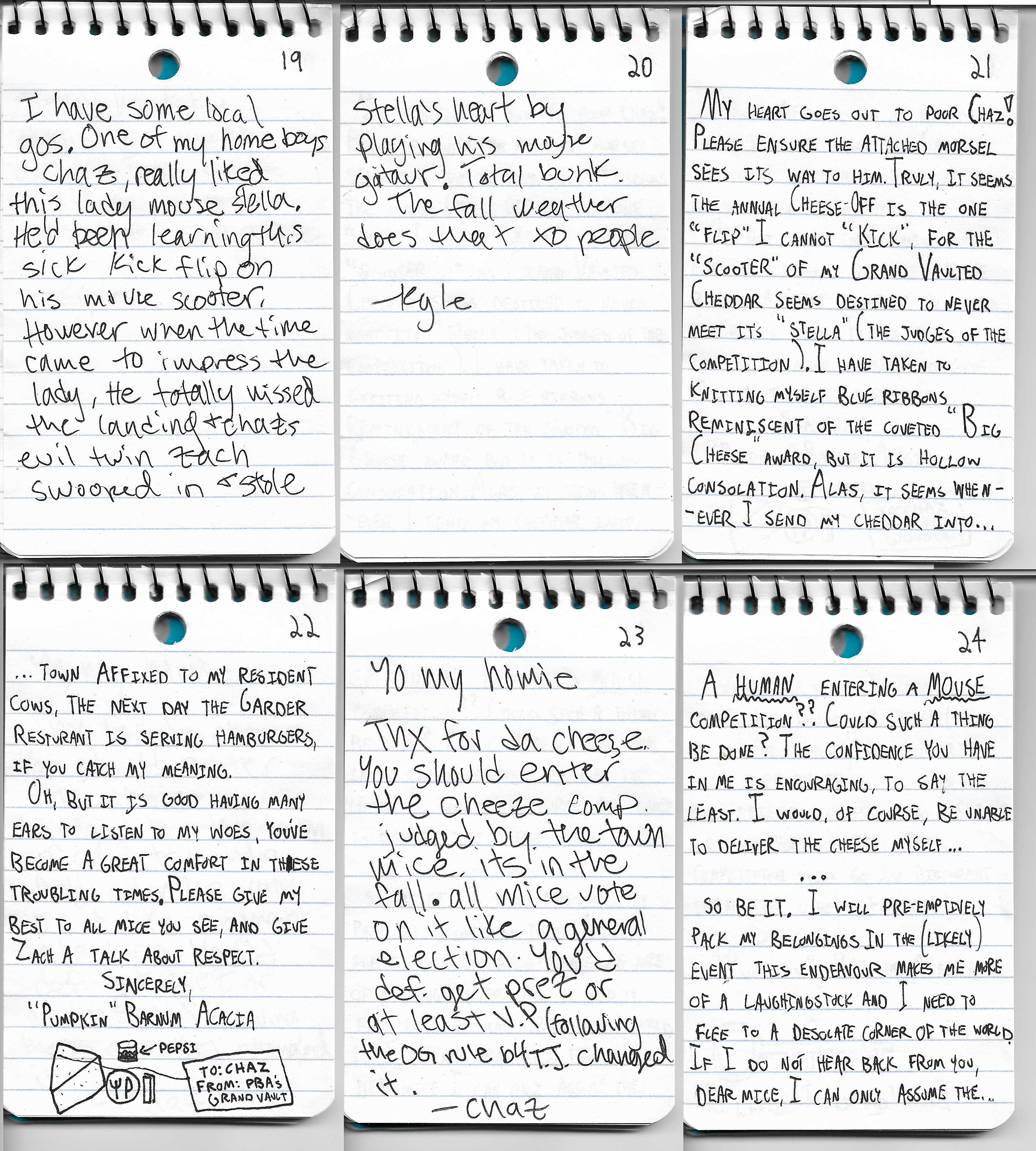
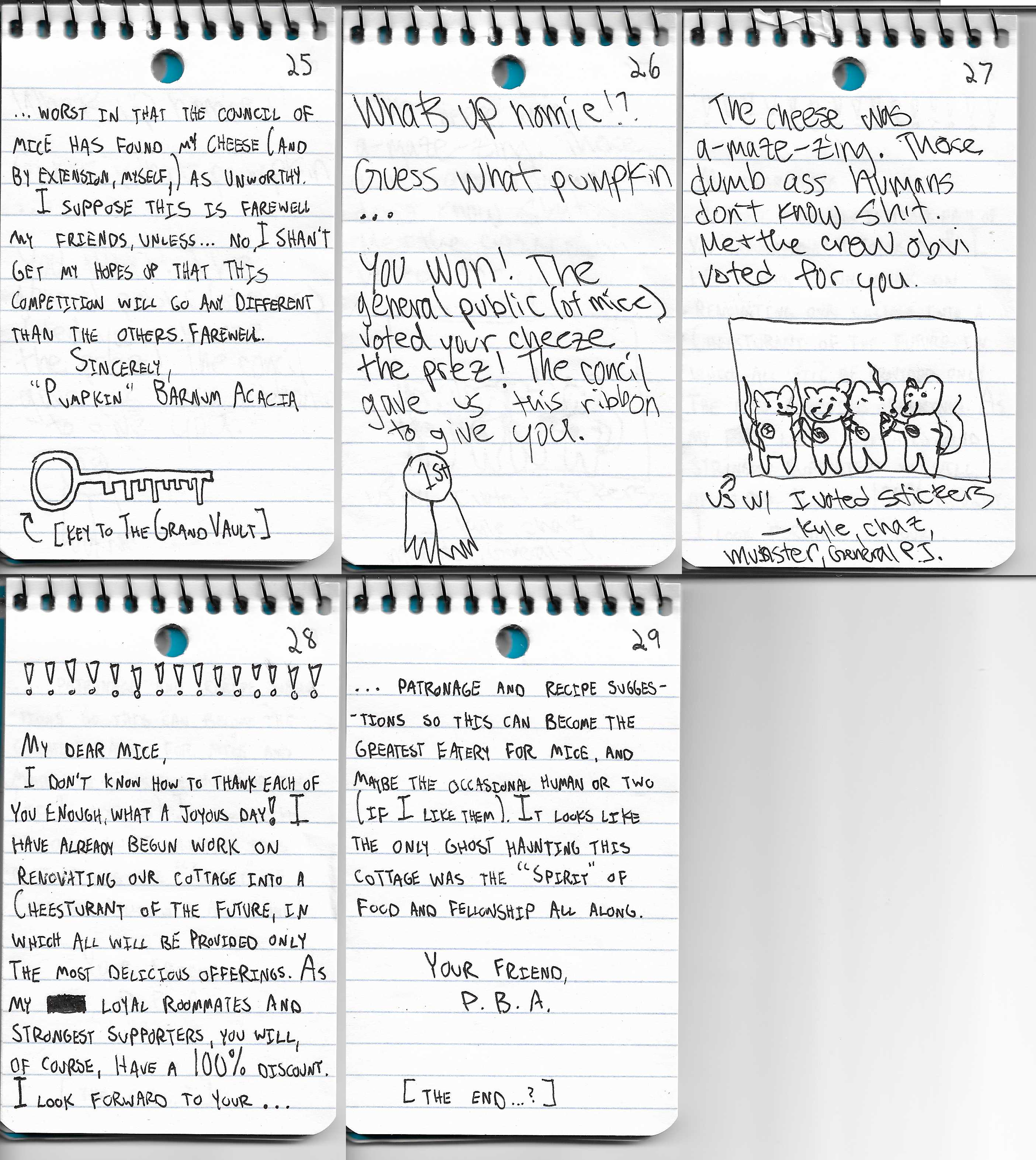
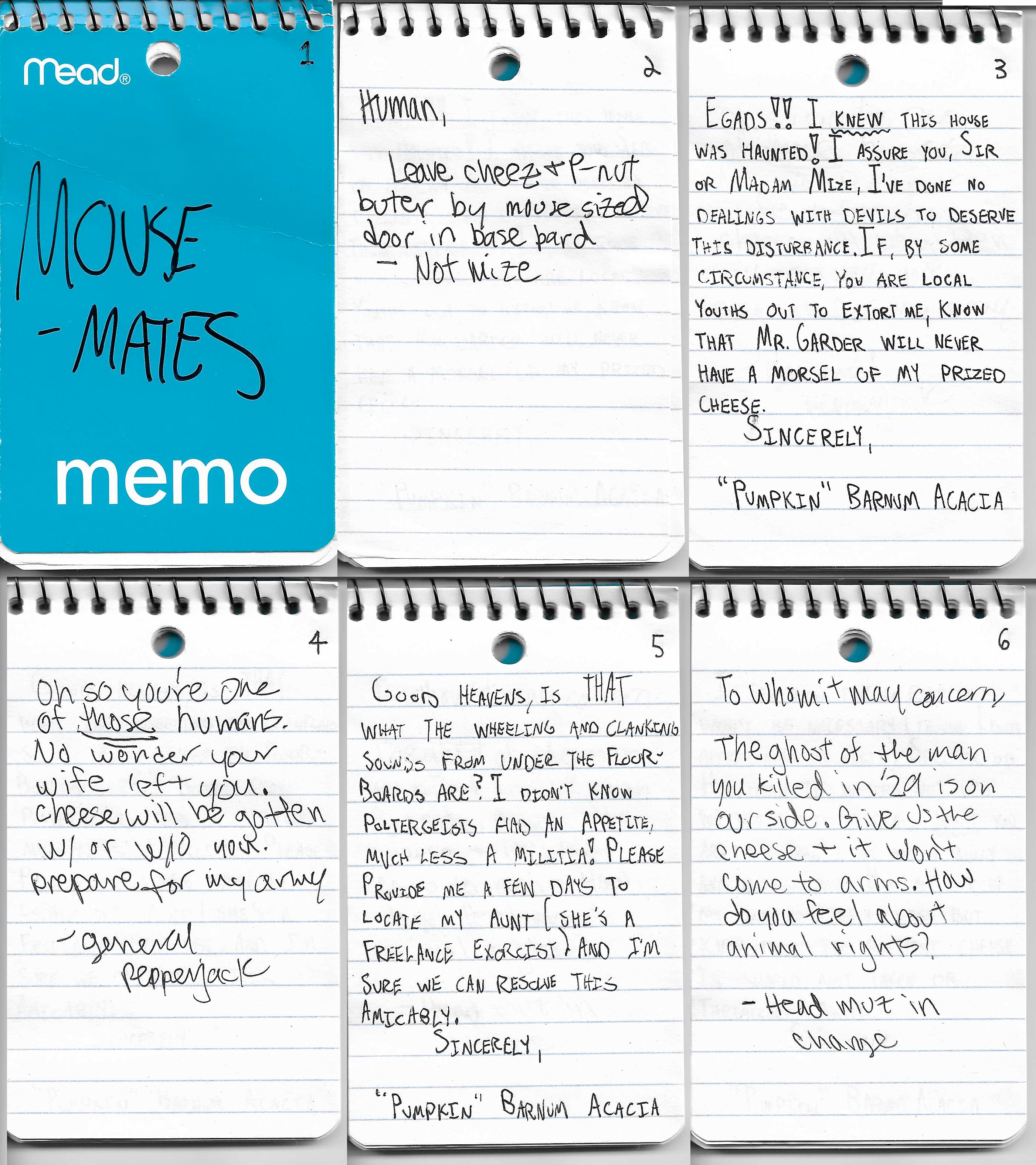
Just finished a game of mousemates, a letter-writing game, with Katrina. We had a notepad on our fridge for a few weeks and it was a really chill time. It’s a lot less pressure to write a note whenever you feel like (we often went days/weeks with no “mail”) than to improv in real-time, and I’ve only had good experiences with journaling/letter writing games. Seriously reccomend giving it a try (or Thousand Year Old Vampire if you prefer solo games). Scanned our notepad below https://beth-the-jackalope.itch.io/mousemate